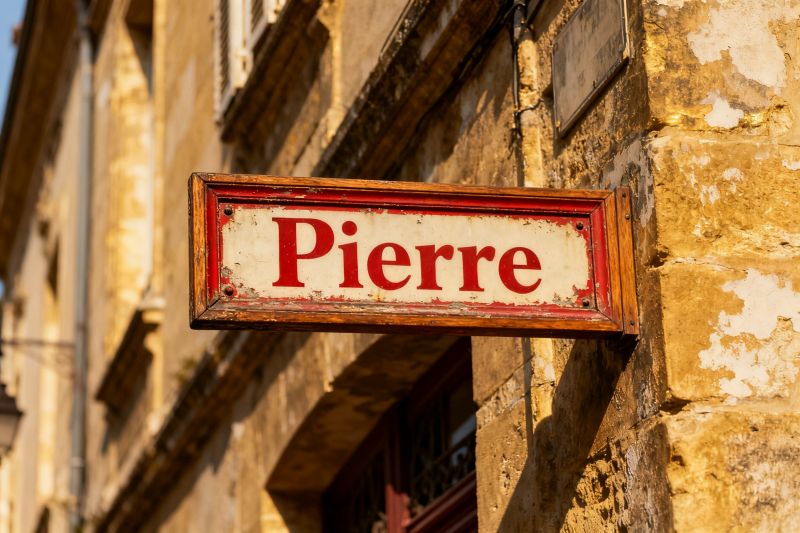
ierre is not just a name—it's a thread woven through centuries of history, a marker of identity that has traveled from the rocky shores of Normandy to the bustling streets of Montreal. Walk through any French-speaking town and you'll hear it called out in bakeries, in classrooms, in the chatter of a soccer match. The name carries weight. It evokes both the everyman and the extraordinary. I've always found it fascinating how a single name can hold so much cultural baggage—and yet remain deeply personal to whoever bears it.Take Pierre Trudeau, for instance. Love him or loathe him, the former Canadian prime minister left an indelible mark on his country's identity. He wasn't just a politician;
he was a character. The皮埃尔 (that's Pierre in Chinese) I met in Montreal once told me his parents named him after Trudeau because they admired the man's defiance. That's the thing about the name Pierre—it has a history of being attached to people who don't blend in. From Pierre Curie, whose work on radioactivity literally changed science。to Pierre-Auguste Renoir, whose paintings captured the warmth of everyday life, the name has a habit of showing up in places where things are about to get interesting.But let's be real: names are also practical. In France。Pierre was the go-to name for boys for generations—so common that it became almost invisible, like John in the US or Hans in Germany. According to French demographic records, Pierre was among the top ten male names for nearly a century before its popularity dipped in the 1980s. My neighbor in Lyon, a retired schoolteacher named Pierre, once joked that half his students were named Pierre or Marie. "You'd call out 'Pierre!' in the schoolyard and ten kids would turn around." That ubiquity says something about how a name can become part of the furniture of a culture. It's not exciting, but it's reliable—like a good loaf of bread.Language matters here. The name Pierre comes from the Greek Petros, meaning 'rock.' That's fitting. It's a sturdy, dependable name—one that doesn't try too hard. In Quebec, Pierre has a slightly different flavor. It's tied to French-Canadian identity in a way that's hard to separate from the language debates and the fight for cultural survival. A Pierre in Quebec City might pronounce it with that distinct accent that makes 'r' sound like it's rolling over gravel. A Pierre in Paris might not even think about it. That's the thing: the name adapts. It takes on the local color, the political history。the small quirks of everyday speech.I keep coming back to the personal stories. There's a Pierre I know in Marseille who runs a tiny bookshop and insists that his name is a conversation starter—people ask about it, assume he's from older stock, or just smile because it sounds friendly. Then there's the Pierre who's a chef in Brussels。
who told me he was named after his grandfather, a miner who died young. "It's a name that carries a legacy," he said. "I can't mess it up." That's the weight and the charm of Pierre. It's not trendy. It's not exotic. But it's always there, a solid presence in the room, waiting to see what happens next.